
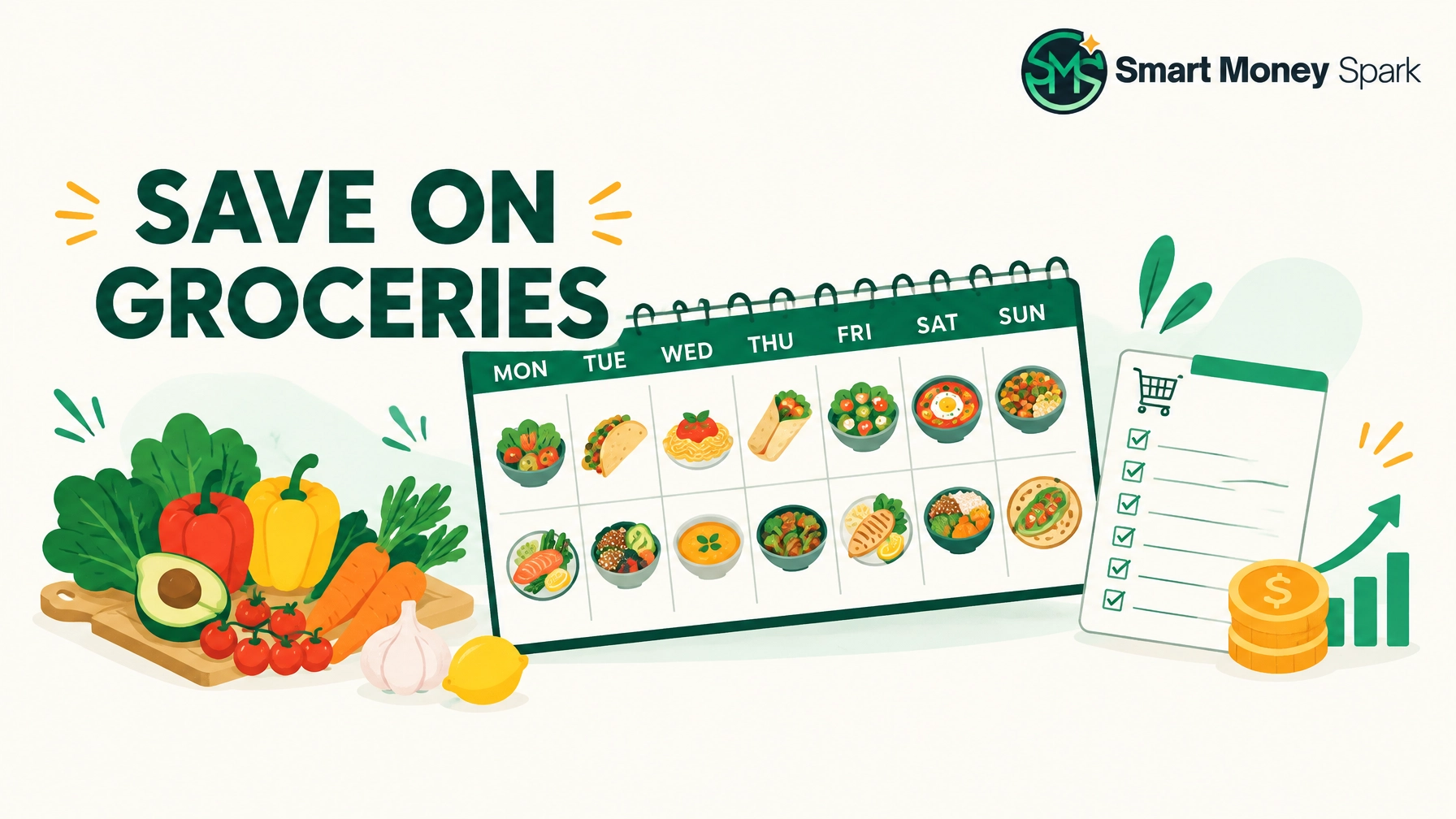
A flexible meal plan can help you spend less while keeping different meals on the menu.
If you’re looking for how to save money on groceries, you may feel stuck between a rising checkout total and a week of meals that all seem to taste the same. Cutting costs doesn’t have to mean eating only pasta or chasing every sale.
A better approach is to plan a few flexible meals, reuse ingredients in different ways, and set a spending limit before you shop. The aim is not to follow a perfect menu: it’s to buy food you’ll use and leave room for variety.
What are practical ways to save on groceries?
Some grocery strategies save time, some make spending easier to track, and some can help reduce food waste. Choose a mix that fits your routine rather than trying to overhaul everything at once.
| Strategy | Helps with | Trade-off |
|---|---|---|
| Plan meals around shared ingredients | Using what you buy | Needs a short planning session |
| Shop from a list and spending cap | Avoiding unplanned extras | You may need to adjust in-store |
| Choose store brands and compare unit prices | Finding lower-cost substitutes | Package sizes and quality vary |
| Use leftovers as ingredients | Reducing waste and making quick meals | Works best with safe storage |
A grocery budget is easier to stick to when it includes meals you actually like. Start with a few dinners, then list the ingredients that can appear in different dishes. For example, beans can go into tacos one night and a grain bowl another.
For a simple framework to organize the rest of your spending, see our guide to seven budgeting methods and how to choose one.
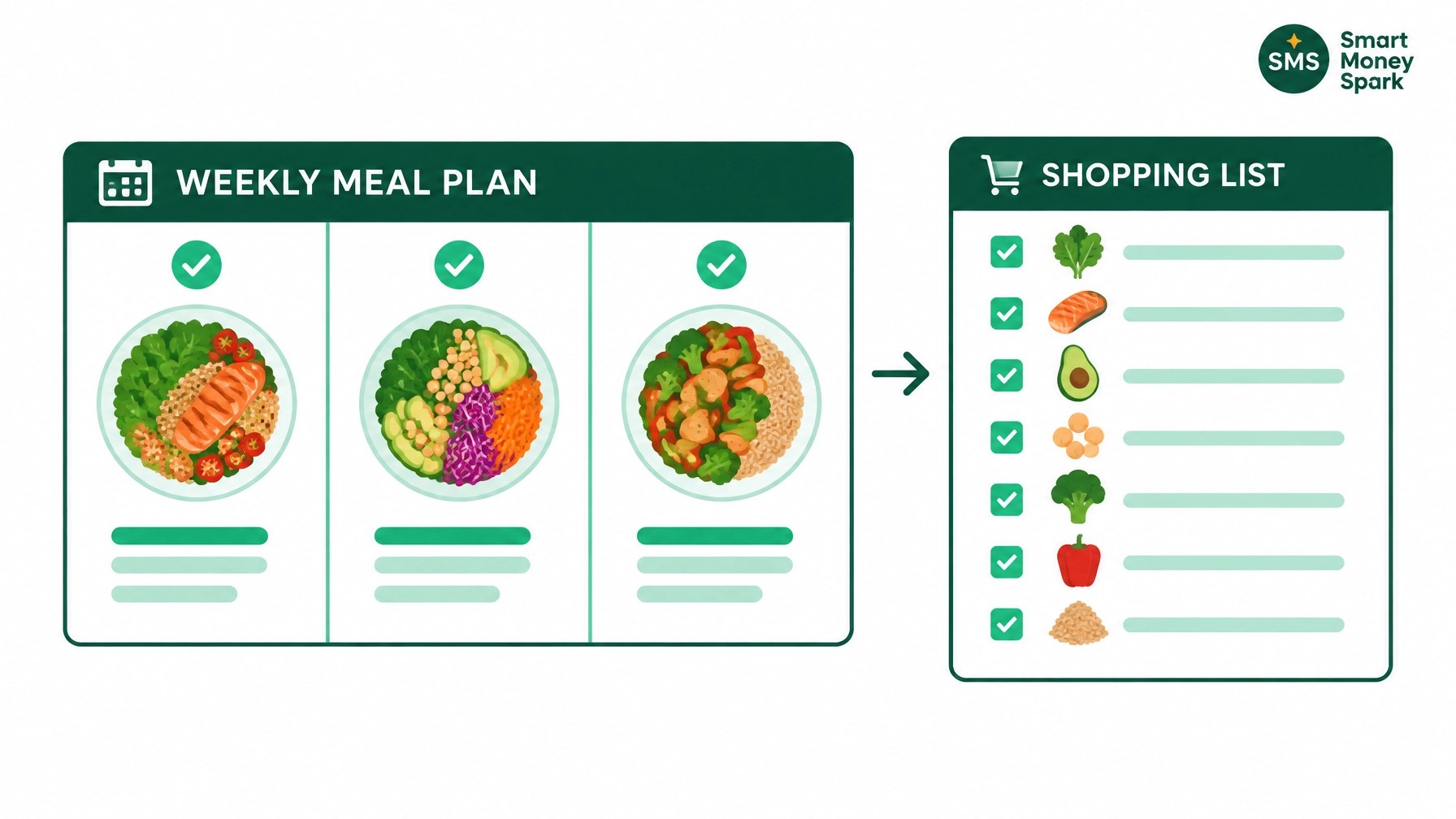
Planning a few flexible meals can make your shopping list more useful without locking you into the same dinner every night.
How do you plan different meals around a few ingredients?
Choose two or three ingredients you’re happy to eat in different forms, then build separate meals around them. You might roast vegetables for a grain bowl, put some in a wrap the next day, and add the rest to soup. The meals share ingredients, but not necessarily the same flavor or format.
Try this four-step routine before your next shop:
- Check what you have. Look in the fridge, freezer, and pantry for food that should be used soon.
- Pick a few meals. Choose two or three dinners and leave other nights open for leftovers, quick meals, or plans that change.
- List ingredients, not recipes. Combine what you need for each meal and cross off what’s already in your kitchen.
- Plan one flexible meal. Keep a simple option (such as eggs, frozen vegetables, or beans) that can change based on what you have.
This leaves you with a plan, not a rigid schedule. If a fresh ingredient is unavailable or costs more than you expected, you can switch to a similar item or adjust the meal.
What might a 20% grocery saving look like?
Here’s an illustrative monthly budget for a family of four spending $900 on groceries for food at home. It shows what a 20% reduction would look like if the household found a way to lower spending across its categories. It is an example, not a promise that every family can save the same amount.
| Category | Starting budget | Illustrative 20% reduction | New target |
|---|---|---|---|
| Produce | $180 | $36 | $144 |
| Protein foods | $220 | $44 | $176 |
| Dairy and eggs | $90 | $18 | $72 |
| Grains and bread | $110 | $22 | $88 |
| Pantry staples | $120 | $24 | $96 |
| Snacks and convenience foods | $100 | $20 | $80 |
| Frozen and other foods | $80 | $16 | $64 |
| Total | $900 | $180 | $720 |
The example applies the same percentage to each category for clarity. In real life, your savings might come from just a few places (buying fewer convenience items, using what’s in your freezer, or swapping selected products) while other costs stay about the same.
To see whether the new amount suits your household, track your actual grocery spending for a month. If the target is too tight, adjust it based on your meals, location, dietary needs, and what you normally buy.
How does your budget compare with USDA food plans?
The USDA’s Food Plans: Monthly Cost of Food Reports provide reference estimates for food prepared at home. In its October 2026 report, the USDA listed monthly costs of $1,129.00 for the Low-Cost Plan and $1,392.70 for the Moderate-Cost Plan for a reference family of four: two adults aged 20–50 and children aged 6–8 and 9–11.
These are national reference amounts, not a recommended minimum or a personalized target. They assume meals and snacks are prepared at home, and actual costs vary with location, family needs, and shopping habits. The illustrative $900 budget above is a separate example, not a USDA estimate.
Use the USDA figures as context, then base your own budget on your household’s needs and recent receipts. If a reference amount seems high or low compared with your spending, that alone doesn’t tell you whether your plan is working. Check whether you’re buying enough food you’ll eat, meeting your needs, and staying within an amount your finances can support.
When does a planned menu work best?
A planned menu can be useful when you tend to shop without knowing what you’ll cook, or when food you already bought often goes unused. It gives you a reason to buy each ingredient and makes it easier to compare the list with your budget before you leave home.
Keep the plan loose enough to handle changes. You can swap dinner days, freeze an ingredient, or choose a different meal if a workday runs late. Planning is a tool, not a rule that says you must cook a specific meal on Tuesday.
When does flexible ingredient shopping work better?
A flexible list may fit better if your schedule changes often, you shop around sales, or you’re comfortable improvising. Write down meal components (such as a grain, a protein, and vegetables) rather than ingredients for seven fixed recipes.
You can then choose among similar options at the store, checking the unit price when package sizes differ. Unit price means the cost per standard amount, such as per ounce or per pound; stores often show it on the shelf label. A lower unit price can help you compare sizes, but only buy a larger package if you expect to use it.
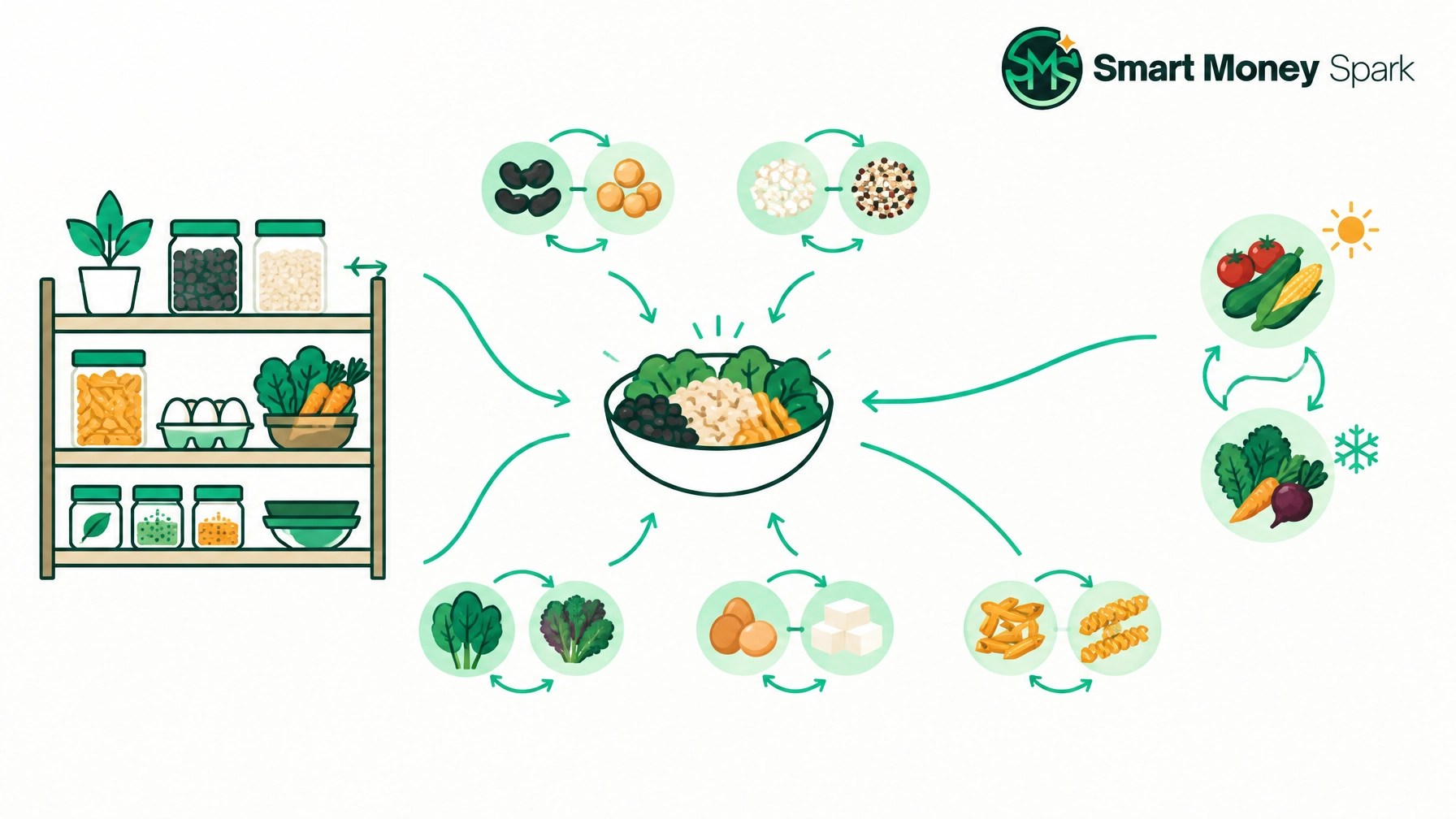
A flexible list leaves room to swap ingredients while keeping the meal plan varied.
How do you choose a grocery-saving approach?
Before changing your routine, ask yourself three questions:
- What is driving your spending? Is it unplanned extras, food waste, prepared items, or a few high-cost staples? Look at a receipt or two before guessing.
- How much planning will you keep up with? If a detailed menu feels like too much, plan just a few meals and leave the rest flexible.
- What does variety mean for your household? Decide which meals or ingredients you want to keep, then look for savings elsewhere.
Rule of thumb: Plan the meals you care about most, then be flexible about ingredients and formats. Set a realistic monthly limit, track what you spend, and adjust based on what you actually use.
If a lower grocery bill leaves money available for saving, our comparison of brokerage cash sweeps and high-yield savings accounts explains some differences to consider when choosing where to hold cash.
Grocery savings questions people actually ask
How can I save on groceries without meal prepping every meal?
Plan a handful of meals and keep the remaining nights flexible. You can wash or portion a few ingredients ahead, but you don’t need to cook every meal in advance.
Is buying in bulk always cheaper?
No. A larger package may have a lower unit price, but it only saves money if you use the food before it spoils and have room to store it. Compare the shelf’s unit prices and buy the size that fits your household.
What should I do with leftovers so meals don’t feel repetitive?
Use leftovers as ingredients in a different dish. Roasted vegetables might become a wrap filling or soup addition; extra rice could go into a different-style bowl with a new sauce or vegetables. Refrigerate food promptly and follow current food-safety guidance.
How often should I review my grocery budget?
Check your spending weekly or after each shop, then review the monthly total. A short review can show whether your limit is realistic and which changes are helping.
Key takeaways
- Plan a few meals around ingredients you can use in different ways.
- Check your pantry and freezer before writing a shopping list.
- Compare unit prices, but buy only what you expect to use.
- Treat the $900-to-$720 example as illustrative, not a guaranteed saving.
- Use USDA food-plan figures as context, not as a household-specific target.
Next step: Before your next shop, check what you already have, choose three meals, and write a list with a spending limit.
This guide is general educational information, not individualized financial advice.
Sources: USDA Food Plans: Monthly Cost of Food Reports, October 2026 · USDA Food Plans overview