
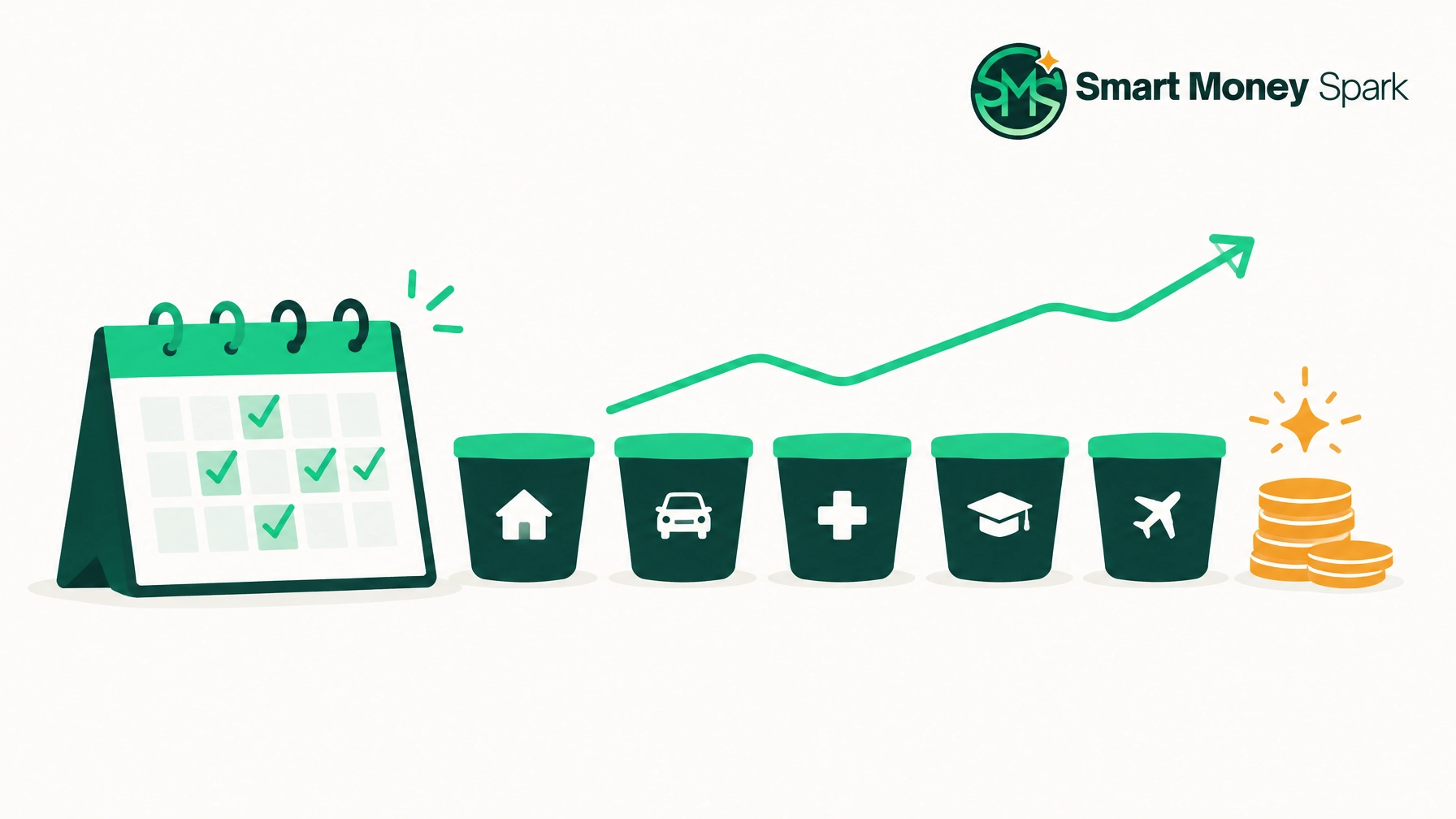
A large bill can turn an ordinary month upside down: the insurance premium arrives, the car needs work, and the money you planned for other things suddenly has another job. A sinking fund can help you avoid that scramble.
A sinking fund is a savings bucket for a known future expense, kept separate from your emergency fund.
What's the difference between a sinking fund and an emergency fund?
| Sinking fund | Emergency fund | |
|---|---|---|
| What it pays for | A known upcoming cost | An urgent, unexpected cost |
| Planned or surprise? | Planned, even if the exact amount can vary | A surprise or disruption |
| How much to hold | The target amount for the upcoming expense | A cushion sized to your circumstances |
| Where the money lives | A labeled savings bucket | Separate savings you reserve for emergencies |
| Example | An annual insurance premium | An unplanned urgent repair |
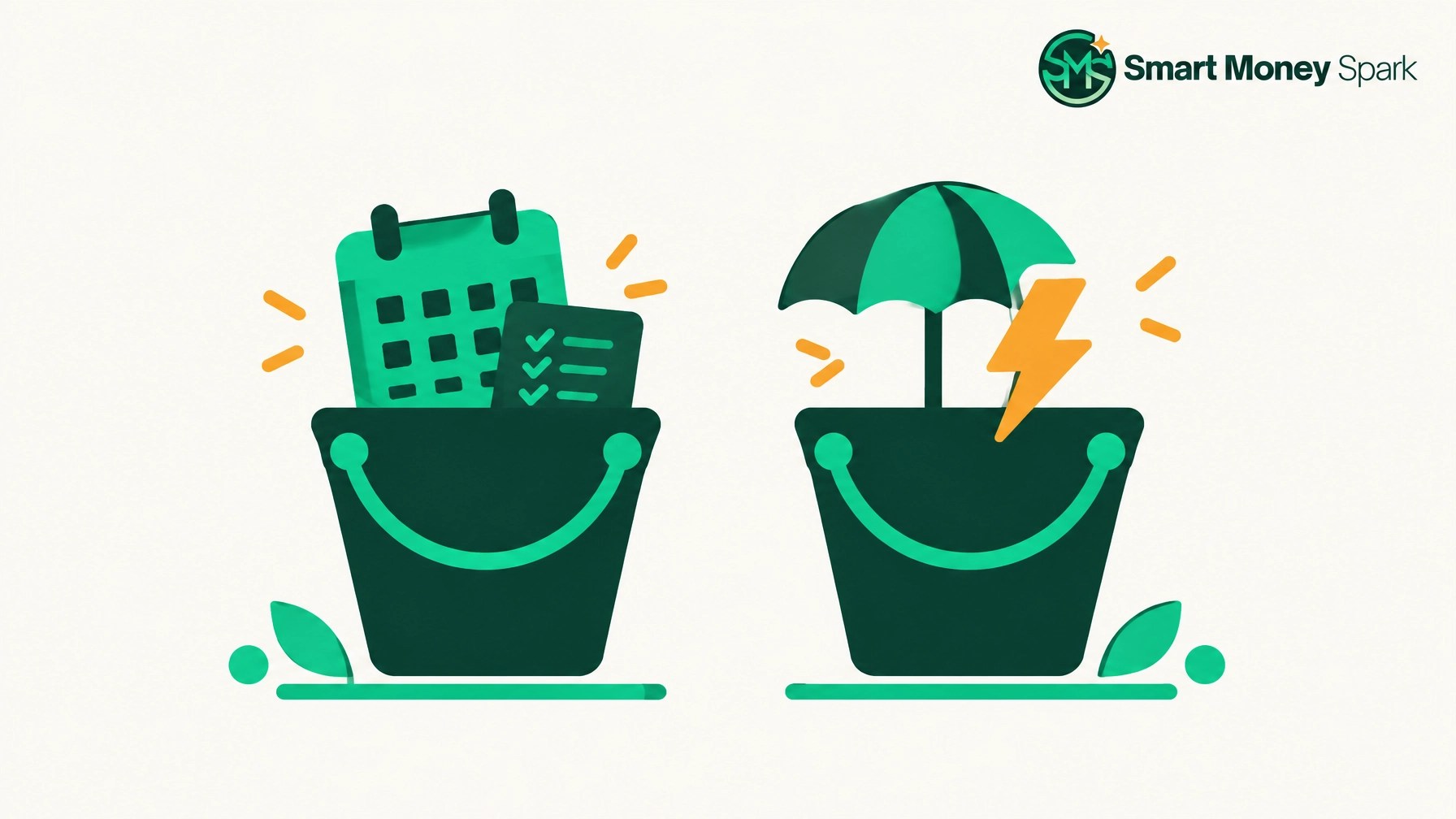
A sinking fund is for costs you can anticipate, even if they don’t arrive every month. It isn’t a replacement for an emergency fund: if something unexpected happens, the emergency reserve is there for that instead.
Which sinking fund categories should most people have?
Start with bills that arrive less often than monthly, plus seasonal expenses you know are coming. These examples use the figures below as planning benchmarks; your actual costs may be different.
| Category | Example monthly set-aside |
|---|---|
| Car insurance | $186.92 |
| Car maintenance and tires | $146.25 |
| Holiday gifts and food | $74.17 |
| Annual subscription | $11.58 |
Set a target and due date for each expense. For a known bill, divide its cost by the number of months until it’s due. For a recurring cost such as car maintenance, use a yearly estimate and spread it across the year.
To keep your plan easy to follow, use one separate high-yield savings account or a named sub-account at the same bank, with one bucket per expense. If you’re choosing a broader system for organizing your budget, see our comparison of seven budgeting methods.
How many sinking funds do you actually need?
Most people do better with three to five buckets than with fifteen. Start with the bills that hurt most when they land together: insurance, car upkeep, holidays, and any annual or quarterly subscription you would rather not think about. Add a bucket only when you can name the expense, estimate the amount, and point to a due date.
A single “irregular bills” bucket works if you are just starting out and tracking every category feels like too much. It is less precise, but it still moves the money out of your checking account, which is the habit that matters most early on. Split it into named buckets once the total grows past a few hundred dollars.
Two habits keep a system alive. Fund the buckets automatically on payday, so the transfer happens before you have a chance to spend the money. Review the amounts every few months, because premiums, repair costs, and holiday plans all drift.
A $5,027 example
Here’s how four predictable expenses add up when you save a little each month. The figures below use the specified costs and monthly amounts.
| Expense | Yearly cost | How often you pay | Monthly set-aside |
|---|---|---|---|
| Car insurance | $2,243 | Twice a year, $1,121.50 each | $186.92 |
| Holiday gifts and food | About $890 | Once in December | $74.17 |
| Car maintenance and tires | $1,755 | As needed | $146.25 |
| Annual subscription | $139 | Once a year | $11.58 |
| Total | $5,027 | $418.92 |
The total monthly set-aside is the combined amount for these four example costs, not a recommended amount for every household. Use your own bills, dates, and budget to build a plan that fits.
It helps to picture the alternative. If those four costs came out of one account as they arrived, you would need $1,121.50 in one month for the insurance renewal and about $890 in December for the holidays, on top of the repair whenever it happens. Smoothing the same $5,027 across twelve months turns those spikes into $418.92 a month.
That number is not a target for you, it is a demonstration of the method. Your own four or five costs will produce a different figure, and that figure is the one that belongs in your budget.
What current-year figures can help you set a target?
Recent figures offer useful starting points, though they aren’t a substitute for checking your own bills. Insurify’s November 2026 car insurance data puts the national average at $2,243 a year for full coverage and $1,184 for liability-only. For vehicle upkeep, AAA’s 2026 Your Driving Costs study estimates maintenance, repairs, and tires at 11.7 cents per mile, about $1,755 a year at 15,000 miles.
For seasonal spending, the National Retail Federation’s most recent published per-person figure is $890.49 for 2025, covering gifts, food, decorations, and other seasonal items; the 2026 survey did not publish a per-person dollar figure. Amazon’s membership pricing lists Prime at $139 a year or $14.99 a month as of November 2026.
Where the money sits also matters. In November 2026, the FDIC’s national savings account rate was 0.39%, while Bankrate’s savings account listings showed some high-yield savings accounts paying around 4% APY. APY means annual percentage yield: the yearly interest rate including compounding. Rates can change, so compare current terms, access, and fees rather than treating a rate as permanent.
Interest credited to a savings account is taxable as ordinary income. The IRS says banks generally report it on Form 1099-INT; see IRS Publication 550.
When smoothing a bill monthly wins
Saving gradually can make a planned bill easier to fit into your regular budget. In the example, setting aside $186.92 a month spreads the cost of car insurance across the year instead of asking one month’s cash flow to cover a $1,121.50 bill.
This approach can be especially helpful when a large expense is due alongside other seasonal costs. A $1,755 repair and an $890 December holiday spend landing in the same month would put pressure on that month’s budget; setting money aside ahead of time can soften the hit.
A sinking fund also protects the rest of your plan. Money that would have gone to a surprise premium is money that cannot raid your emergency reserve, which means a single bill stops turning into a second one.
When paying in one hit wins
Paying a bill in one payment may make sense if the provider offers a discount for paying in full and you already have the money set aside. Compare the discount with the benefit of keeping the cash available, and check whether paying in full changes the terms or flexibility of the bill.
Some insurers charge an installment fee each time you pay and reduce the premium when you pay the whole term at once. As an illustration only, if a $2,243 annual premium came with a 5% paid-in-full discount, you would keep about $112, and you would need the full amount available on the renewal date rather than in twelve pieces.
Run that trade-off with your own numbers, because a discount smaller than the interest you could earn on the cash, or smaller than the flexibility you give up, is not a clear win. Ask the provider for the exact paid-in-full price and the exact installment price, then compare the two totals rather than the monthly figure.
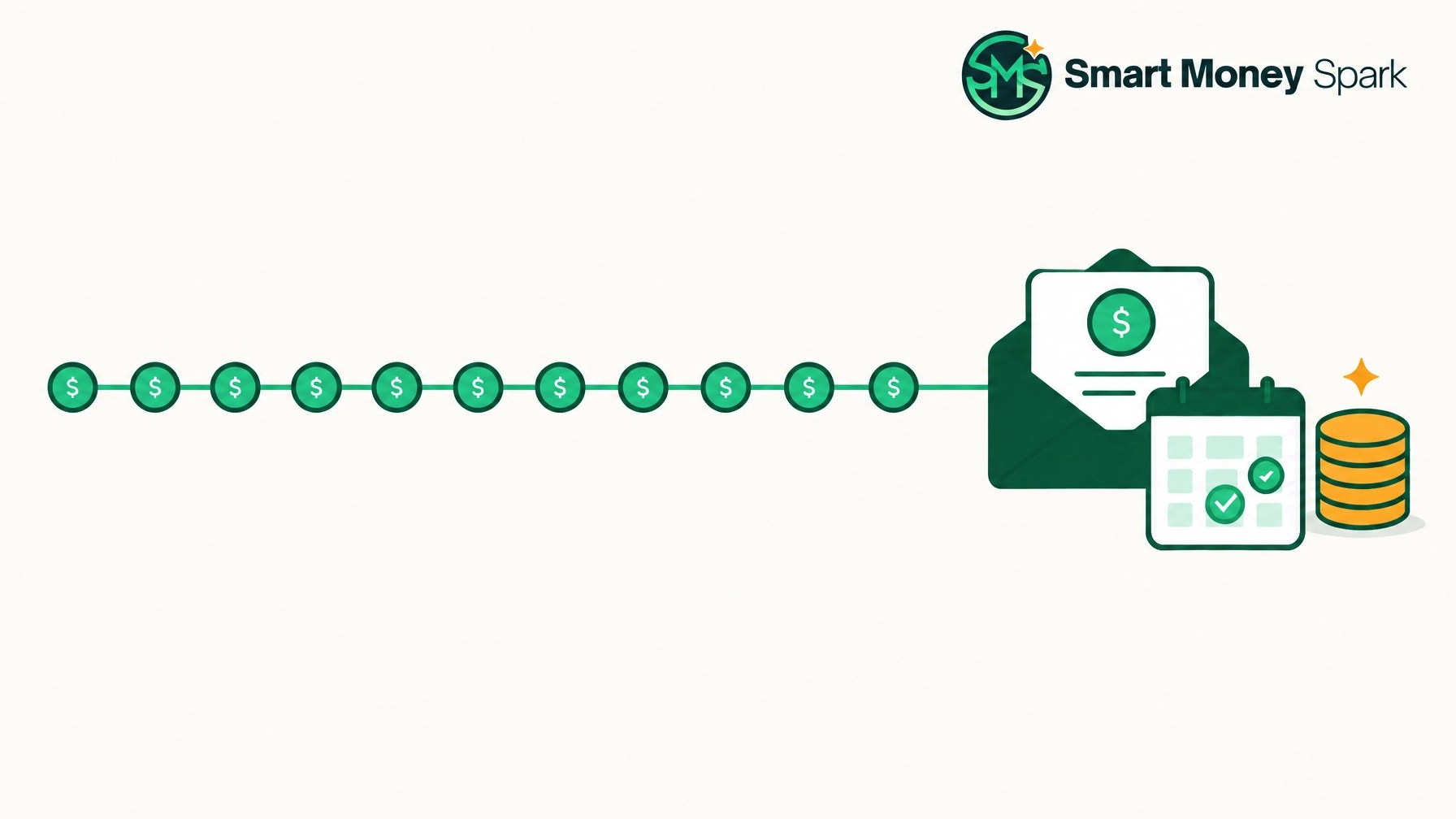
A sinking fund doesn’t require you to pay monthly. It helps you prepare for a known expense, then choose a payment method when the bill comes due.
How should you decide between monthly and one-time payment?
Ask yourself:
- Is the cost known and planned? If so, it may fit a sinking fund; a true surprise may call for emergency savings.
- Can you set aside the needed amount before the due date? If not, adjust the target, timeline, or budget rather than assuming the full amount will be ready.
- Does paying in full earn a discount that matters to you? Compare the savings with the value of keeping the cash accessible.
Rule of thumb: Save gradually for a predictable cost, then pay in the way that best fits the bill’s terms and your cash flow.
Sinking funds FAQs
How do I calculate my monthly sinking fund contribution?
Divide the amount you expect to pay by the number of months until it’s due. For recurring expenses without a fixed bill date, estimate the yearly cost and spread it across the year.
How much should I put in a sinking fund first?
Start with the bill that is closest and most expensive relative to your monthly cash. Funding one bucket fully before opening a second keeps the plan simple, and it gives you a visible win early on.
Can a sinking fund replace an emergency fund?
No. Use sinking funds for expenses you can plan for and keep emergency savings for unexpected costs or disruptions.
Should I keep each sinking fund in a different bank account?
Not necessarily. You can use one separate high-yield savings account with named sub-accounts or buckets, or another clear labeling system. Make sure you can track how much is assigned to each expense.
Is interest from a sinking fund savings account taxable?
Interest credited to a savings account is generally taxable as ordinary income and may be reported on Form 1099-INT. Check IRS guidance or ask a tax professional about your circumstances.
Key takeaways
- Use a sinking fund for a known future expense, not an unexpected emergency.
- Set a target and due date, then divide the cost across the time available.
- Keep the money in a separate savings account or named sub-account, with one bucket per expense.
- Check current account rates and terms; savings yields can change.
- Compare monthly saving with paying in full when a discount is available.
Next step: List your next few predictable bills, add their due dates, and schedule a transfer for one expense you want to prepare for first. If you’re comparing places to hold the money, read our comparison of a brokerage cash sweep and a high-yield savings account.
This is educational information, not individualized financial advice.